Home Buying 101
How Much House Can You Actually Afford in 2025?
Your pre-approval letter is a lie. It tells you what the bank is willing to lend you, not what you can afford to pay. Here is the real math.
10 min read
•
The "House Poor" Trap
Imagine moving into your dream home. It has a granite island and a backyard for the dog. But to pay for it, you can never afford furniture for the guest room, you cancel your family vacation, and you panic every time the Check Engine light turns on.
This is called being "House Poor."
In 2025, with interest rates hovering near historic norms (around 6-7%) and home prices staying high, the margin for error is razor-thin.
The bank's job is to sell you a loan. Your job is to protect your wallet. To do that, you need to ignore the bank's maximum number and use the 28/36 Rule.
Run Your Numbers
Don't guess. Input your income and debts to find your safe price range.
The Golden Standard: The 28/36 Rule
This is the formula conservative financial advisors swear by. It has two parts:
1. The Front-End Ratio (28%)
Your total housing costs should not exceed 28% of your Gross Monthly Income.
Housing Costs = Principal + Interest + Taxes + Insurance + HOA.
2. The Back-End Ratio (36%)
Your total monthly debt payments should not exceed 36% of your Gross Monthly Income.
Total Debt = Housing + Car Loans + Student Loans + Credit Cards.
Real World Example ($100k Salary)
Let's say you earn $100,000/year ($8,333/month). You have a $500 car payment and a $300 student loan.
| Limit Type | Math | Max Monthly Payment |
|---|---|---|
| Front-End (28%) | $8,333 x 0.28 | $2,333 |
| Back-End (36%) | ($8,333 x 0.36) - $800 Debt | $2,200 |
The Verdict: Even though the Front-End rule says $2,333, your existing debt lowers your limit. You can only afford a mortgage payment of $2,200.
The "Hidden Killers" of 2025: T and I
When you see a mortgage payment estimate on Zillow, it usually just shows Principal & Interest. It ignores the "T" and "I" in PITI.
⚠️ Don't Forget P.I.T.I.
- Taxes: Property taxes have spiked. In states like Texas or New Jersey, this can add $800 - $1,200/month to your bill.
- Insurance: Homeowners insurance in 2025 is a crisis. In Florida and California, premiums have doubled. Budget at least $150-$300/month (or much more in coastal areas).
- HOA Fees: Condos often have $400+ monthly fees that rise every year.
Interest Rates: The Purchasing Power Destroyer
Your budget isn't determined by the home price. It is determined by the interest rate.
If you can afford a $2,500 monthly payment:
- At 4% Interest: You can buy a $520,000 house.
- At 7% Interest: You can buy a $375,000 house.
That is a $145,000 loss in purchasing power, just because of the rate. This is why you must shop for rates aggressively.
The Down Payment Dilemma
"Do I really need 20% down?"
No. First-time buyers often put down 3% to 5%. However, putting down less than 20% triggers PMI (Private Mortgage Insurance).
PMI usually costs 0.5% - 1% of the loan amount per year. On a $400k home, that's an extra $200/month thrown into the trash. It protects the bank, not you.
Strategy: If you can't do 20%, aim for 5-10% and prioritize paying down the loan aggressively to remove PMI as fast as possible.
Frequently Asked Questions
What is DTI (Debt-to-Income)?
DTI is the percentage of your gross income that goes to debt. Most banks allow up to 43% (sometimes 50% for FHA). But living at 50% DTI is financial suicide. Stick to 36%.
Should I buy points to lower my rate?
Maybe. "Points" are upfront fees paid to lower the interest rate. Calculate the "Break-Even Period." If it takes 6 years to save enough interest to cover the upfront cost, but you plan to move in 5 years, don't do it.
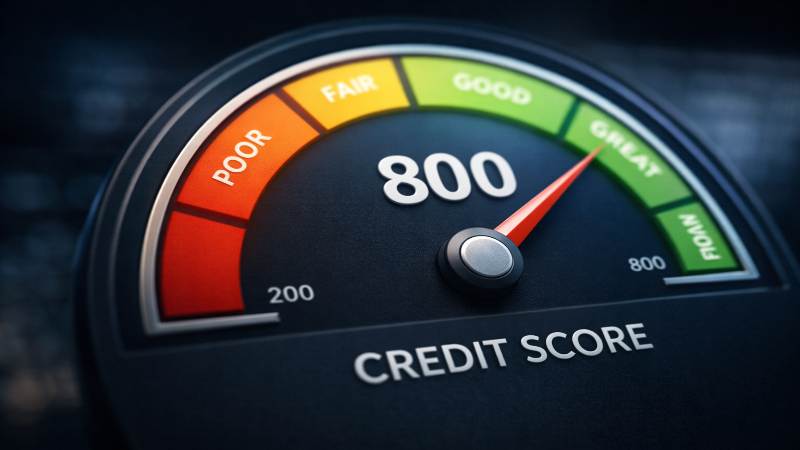
Does my credit score affect affordability?
Massively. A 760 score gets the best rate. A 640 score might pay 0.75% higher. That 0.75% difference can cost you $30,000+ over the life of the loan.
Find Your "Sleep Well" Number
Don't let a mortgage broker dictate your lifestyle. Use our comprehensive calculator to factor in Taxes, Insurance, and HOA fees today.