Financial Education Series
The 5 Pillars of Wealth: Your Roadmap to Financial Freedom
Wealth isn't about luck or picking the next hot stock. It's an engineering problem. Here is the blueprint to build a fortress around your financial future in 2025.
15 min read
•
Table of Contents
Introduction: Why Most "Financial Advice" Fails
If you scroll through TikTok or YouTube shorts, you'll see a lot of noise. "Buy this crypto," "Flip this house," "Start this dropshipping store." The problem with this advice isn't that it's wrong—it's that it's incomplete.
Imagine trying to build a roof before you've laid the foundation. That is what most people do with their money. They try to invest (Pillar 4) before they have learned to save (Pillar 2) or protect their downside (Pillar 3).
Real, lasting wealth is built on a system. Think of your financial life as a table held up by five legs. If one leg is weak, the table wobbles. If two break, everything collapses.
This guide is your inspection report. We are going to look at each pillar, explain why it matters in the 2025 economy, and give you the specific tools to fix it.
Pillar 1: Earn (Playing Offense)
You cannot save your way to millions if you are earning minimum wage. Frugality has a mathematical floor—you can only cut your expenses to zero. But earning? Earning has no ceiling.
In 2025, the "Career Ladder" is dead. It has been replaced by the "Income Portfolio." Relying on a single paycheck is the single biggest risk to your financial health.
The Two Levers of Income
- Primary Career Optimization: Are you being paid market rate? Inflation has eroded wages by nearly 15% over the last few years. If you haven't negotiated a raise or switched jobs recently, you are likely underpaid.
- Scalable Side Hustles: The gig economy isn't just for delivering food anymore. It's about monetizing skills. Consulting, digital products, and freelance services allow you to decouple your time from your money.
💡 Pro Insight: The Tax Trap
Making extra money is great, but remember that side hustle income is untaxed. New freelancers often get crushed by the 15.3% Self-Employment tax bill. Before you start spending your side income, run the numbers.
Making extra money is great, but remember that side hustle income is untaxed. New freelancers often get crushed by the 15.3% Self-Employment tax bill. Before you start spending your side income, run the numbers.
Pillar 2: Save (Managing the Gap)
Earning money makes you rich; saving money makes you wealthy. The difference between your income and your expenses is called "The Gap." Your entire financial future depends on how wide you can make this gap.
The 50/30/20 Rule in 2025
Budgeting doesn't have to be painful. The gold standard is the 50/30/20 rule, but in 2025, we need to adjust it for high housing costs.
- 50% Needs: Rent/Mortgage, Groceries, Utilities. (If you live in a high-cost city, this might be 60%).
- 30% Wants: Dining out, Netflix, Travel. This is what makes life worth living.
- 20% Future: Savings, Investments, and Debt Payoff. This is non-negotiable.
Most people fail at saving because they try to save "what's left" at the end of the month. The secret is to Pay Yourself First. Automate a transfer to your savings account the day your paycheck hits.
Build Your Plan
Don't know where your money goes? Create a 50/30/20 budget in 2 minutes.
Open Budget Planner →Set a Target
Saving for a house? See exactly how much you need to put away monthly.
Calculate Savings Goal →Pillar 3: Protect (The Shield)
You can earn $200k a year and save 50% of it, but one car accident, medical emergency, or lawsuit can wipe you out to zero. Pillar 3 is about Defense.
The Three Lines of Defense
1. The Emergency Fund
This is not an "investment." This is insurance. You need 3 to 6 months of living expenses sitting in a High-Yield Savings Account (HYSA). Do not touch it unless the house is on fire (metaphorically or literally).
2. Debt Elimination
High-interest consumer debt (Credit Cards at 20%+) is a financial cancer. It compounds against you. Before you invest a single dollar in the stock market, you must kill your high-interest debt.
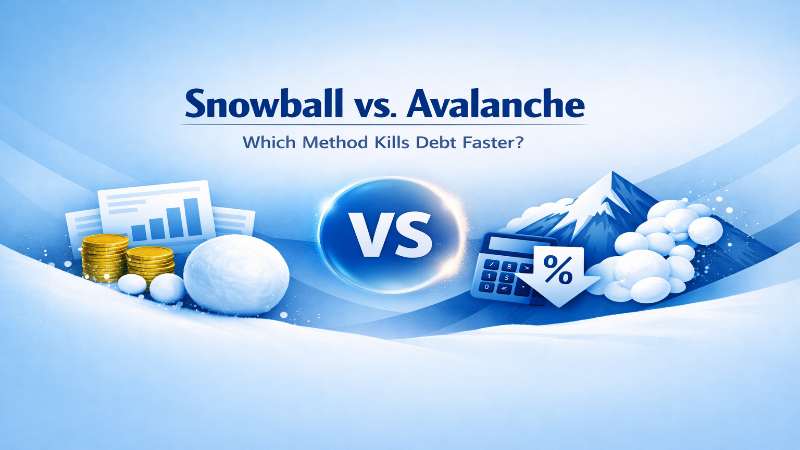
Use the Avalanche Method (pay highest interest first) to save money, or the Snowball Method (pay smallest balance first) to build momentum.
3. Your Credit Score
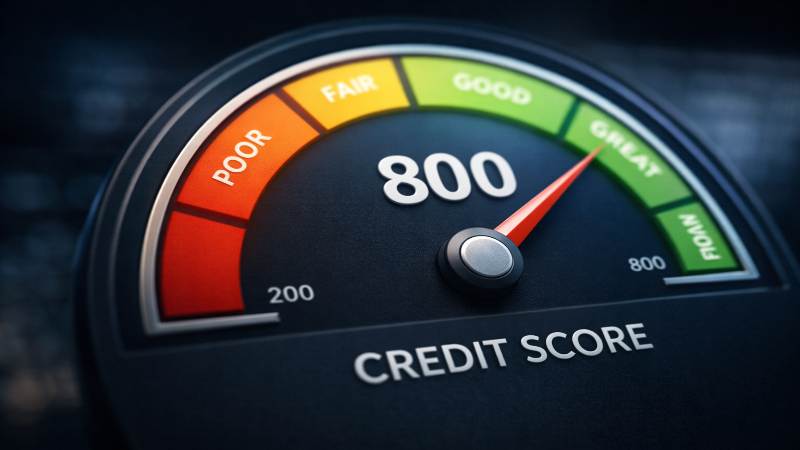
In the US, your credit score is your reputation. A score of 760+ gets you the best rates. A score of 620 costs you hundreds of thousands of dollars over a lifetime in extra interest.
The Cost of Bad Credit
On a $400,000 mortgage, the difference between a 6.5% rate (Good Credit) and a 7.5% rate (Fair Credit) is over $95,000 in extra interest.
Pillar 4: Invest (The Wealth Engine)
Saving preserves money. Investing grows wealth. Why? Because of Inflation. If you bury your cash in the backyard, it loses about 3% of its value every year. You invest to beat inflation and unlock the power of Compound Interest.
The Hierarchy of Investing
Don't just throw money into Robinhood. Follow this order of operations to maximize tax benefits:
01
Employer Match (401k): This is free money. If your boss matches 3%, contribute 3%. It's an instant 100% return.
Calculate your 401k growth →
Calculate your 401k growth →
02
HSA (Health Savings Account): If eligible, this is the only "triple tax-advantaged" account in existence.
03
Roth IRA: Pay taxes now, grow tax-free forever. This is powerful for young earners.
The Rule of 72: Want to know when your money will double? Divide 72 by your interest rate. At 8% return, your money doubles every 9 years.
Time is your best friend. A 25-year-old who invests $300/month will have more money at retirement than a 35-year-old who invests $600/month.
Pillar 5: Preserve (The Legacy)
Getting rich is hard. Staying rich is harder. The final pillar is about tracking your progress and ensuring your money outlasts you.
Net Worth: The Only Score That Matters
Your salary is not your wealth. Your expensive car is not your wealth (it's a liability). Your wealth is your Net Worth (Assets minus Liabilities).
You should track your Net Worth once a quarter. If it's going up, you're winning. If it's going down, you need to revisit Pillar 2 (Spending) or Pillar 3 (Debt).
The "Run Out" Date
The biggest fear for retirees isn't dying; it's running out of money before they die. You need to understand your "Safe Withdrawal Rate" and how taxes will impact your retirement income.
Frequently Asked Questions
Which pillar should I start with?
Start with Pillar 3 (Protect) if you have high-interest debt or no emergency fund. This stops the bleeding. If you are debt-free, start with Pillar 2 (Save) to build your capital for investing.
Does owning a home count as an asset?
Yes, on your Net Worth statement, it is an asset. But for daily cash flow, it is often a liability (it takes money out of your pocket). Don't rely solely on home equity for retirement.
How much cash should I keep?
Keep 3-6 months of expenses in an Emergency Fund. Any cash beyond that is losing value to inflation. Invest the excess.
Your Journey Starts Now
Information without action is just entertainment. Pick one tool below and run your numbers today. Your future self will thank you.