The Power of "Free Money" & Time (2026 Edition)
A 401(k) is arguably the most powerful wealth-building tool available to American employees. It combines three superpowers: Tax Advantages, Employer Matching, and Compound Interest. In 2026, with updated contribution limits and looming tax changes, understanding these levers is more important than ever.
The Employer Match Secret
Never turn down a match! If your employer matches 3%, and you contribute 3%, you just made an instant 100% return on your money. No stock market investment can guarantee that. Use our Compound Interest Calculator to see how this boost amplifies over decades.
Why Starting Early Matters More Than You Think
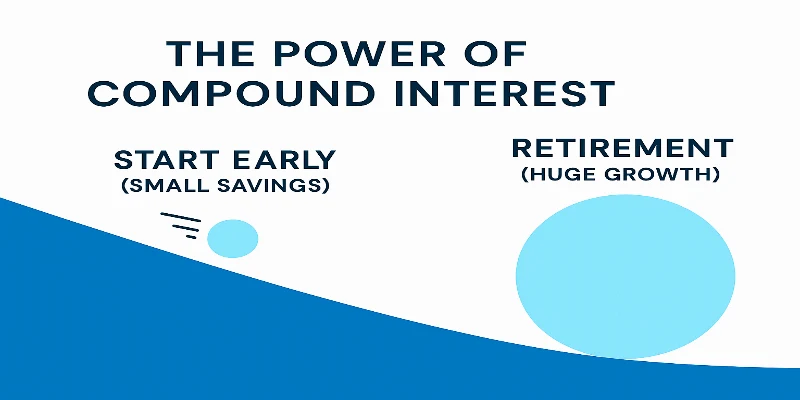
A 25‑year‑old who invests $500/month and earns 7% annually will have over $1.2 million by age 65. Waiting just 10 years cuts that number in half. The reason is the exponential nature of compounding. Use our tool above to slide the "Years" bar and see the difference yourself.
The Impact of Fees (The Silent Killer)
A 1% annual fee might not sound like much, but over 40 years it can consume 30% of your potential returns. Always choose low-cost index funds or ETFs. Compare options in our ETF vs Mutual Funds guide.
Roth 401(k) vs. Traditional 401(k) – 2026 Tax Cliff
The Tax Cuts and Jobs Act (TCJA) is set to expire soon, meaning tax brackets could revert to higher 2017 levels. If you expect taxes to rise, Roth contributions become more attractive: you pay taxes now at lower rates and enjoy tax‑free withdrawals later. Read our deep dive on Roth vs Traditional.
2026 Contribution Limits & Catch-Up
- Standard Limit: $23,500 for employees under age 50.
- Catch-Up Contribution: An additional $7,500 is allowed for those age 50 or older (Total: $31,000).
- Employer + Employee Total: The combined limit is $69,000 (or $76,500 with catch-up).
If your contributions exceed these limits, your plan may reject the excess or you may face tax penalties. Use our calculator to stay within limits.
Understanding the 4% Rule
How do you know if you have enough? The 4% Rule is a common rule of thumb. It suggests you can withdraw 4% of your total retirement portfolio in the first year of retirement, and adjust that amount for inflation in subsequent years, without running out of money for at least 30 years. Our calculator automatically estimates your monthly income using this rule based on your projected final balance.
Sequence of Returns Risk
The year you retire matters. If the market drops early in retirement, withdrawing the same amount can devastate your portfolio. Consider a "bucket strategy" or a more conservative allocation as you approach retirement. Learn more in our Retirement Planning Guide.
Frequently Asked Questions
What is a 401(k) and how does it work? ↓
A 401(k) is an employer-sponsored retirement account that allows you to save and invest a portion of your paycheck before taxes are taken out (Traditional) or after taxes (Roth). Employers often match a percentage of your contributions, which is essentially free money.
What is the 2026 contribution limit for 401(k)? ↓
For 2026, the standard 401(k) contribution limit is $23,500. If you are age 50 or older, you can contribute an additional $7,500 in catch-up contributions, for a total of $31,000.
Should I choose a Roth 401(k) or Traditional 401(k)? ↓
The choice depends on your tax situation. Traditional contributions lower your taxable income now, but you pay taxes on withdrawals in retirement. Roth contributions are taxed now, but withdrawals are tax‑free. If you expect to be in a higher tax bracket later, Roth may be better. With the 2026 Tax Cliff looming (higher future rates), Roth is increasingly attractive.
How much should I contribute to get the full employer match? ↓
At a minimum, contribute enough to get the full employer match. For example, if your employer matches 50% of your contributions up to 6% of your salary, you should contribute at least 6% to get the maximum match. Anything less is leaving free money on the table.
Can I withdraw from my 401(k) early without penalty? ↓
Withdrawals before age 59½ are generally subject to a 10% early withdrawal penalty plus income taxes. Exceptions include financial hardship, certain medical expenses, or if you leave your job at age 55 or older. However, it's best to avoid early withdrawals to preserve the power of compounding.
What is the 4% rule and how is it used? ↓
The 4% rule is a guideline for retirement withdrawals. It suggests that you can withdraw 4% of your portfolio in the first year of retirement, and then adjust that amount for inflation each year, with a high probability that your money will last 30 years. Our calculator estimates your monthly income using this rule.
This tool is for informational purposes only and does not constitute financial advice.
Results are estimates based on user inputs and standard U.S. assumptions. FinanceSmartUSA is not a lender, broker, or financial advisor.
Useful Tools
Popular Articles
Pro Tip
Increasing your contribution by just 1% each year can add hundreds of thousands to your final balance.
Learn How

